

Genetic indicators
COI — inbreeding
0%
No common ancestor over 5 generations.
AVK — distinct ancestors
45.2%
28 distinct ancestors out of 62 possible. Among known ancestors only: 90.3%.
Pedigree completeness
50%
31 empty slots. The AVK takes them into account, so read both figures together.
Value for the breed's diversity
Very common pedigree — rarer than 6% of the Akita born in the last 15 years (since 2012)
How often its ancestors (over 6 generations) appear in the pedigrees of the 27,684 recent dogs: using dogs with a rare pedigree helps keep diversity in the breed. Over: 6 generations 8 generations 10 generations
How these figures are calculated
COI — Wright's formula: F = Σ (½)n₁+n₂+1 × (1 + FA), summed over every path through a common ancestor A. The number of generations must be fixed for two dogs to be comparable: a more complete pedigree mechanically raises the figure.
AVK — distinct ancestors divided by the theoretical number of ancestors. Over 5 generations there are 62 possible slots. 100% means no ancestor appears twice.
Completeness — the share of slots actually filled in. The AVK is misleading without it: a half-empty pedigree shows a low AVK even with no inbreeding at all, simply because data is missing.
Pedigree
The whole tree fits on screen. Pinch to zoom in on a dog.
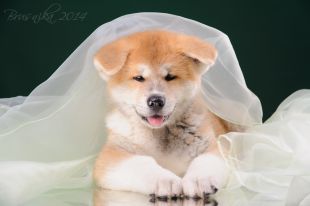 Mokamura Daigo Kendhi ♂
 Russia
 Russian Ch., GRAND Russian Ch.,National Akita Club Ch., Finland Ch.Ugenta Go Shirai ♂
 JapanHayatemaru Go Ooshiro ♂JapanYumemeguri Go Shirai ♀Japan
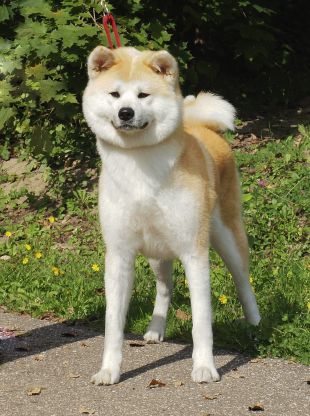 RUSSIAN AKIHO WINNER 2012, RUSSIAN AKIHO WINNER 2013,RUSSIAN AKIHO WINNER 2014, Russian Junior Ch., Russian Ch., National Akita Club Junior Ch., Junior winner of national club akita,Ch NCP,Winner of national club akitaMegapolis Style Imoko Hinata ♀Russia
 AKIHO-RUSSIA Champion, INT Ch., GRAND Russian Ch., National Akita Club Ch., Estonian Ch, Lithuanian Ch., Russian Ch., RKF Ch., Russian Junior Ch., CACIBsHoukou Go Fukuoka Sekido ♂Japan
 INTERNATIONAL CHAMPION; NATIONAL AKITA CLUB CHAMPION; AKITA CUPS AND EUROPEAN HOZONKAI PLACER; GRCH RUSSIA; CH RKF, RUS, UKR, BEL, LIT; J CH CLUB, RUS; CACIB X 5Futaba Go Shirai ♀Japan
Offspring and relatives
Grouped by litter, with both parents at the top of each block. Click to see the puppies of a dog.
Half-siblings, sire's side 1 litter · 1 dog
- ♂ Djiro KendhiRed